We buy computer parts
Sell computer parts in Albany for cash
Computer parts are the thing people throw away without asking, and right now they are worth asking about. If you upgraded a PC and kept the old memory, pulled a drive out of a machine before recycling it, or cleaned out a closet and found a bag of parts, bring the bag. We also buy by the lot from businesses, repair shops and IT departments clearing a server room. A single stick of memory or a whole crate of them, we will look at either.
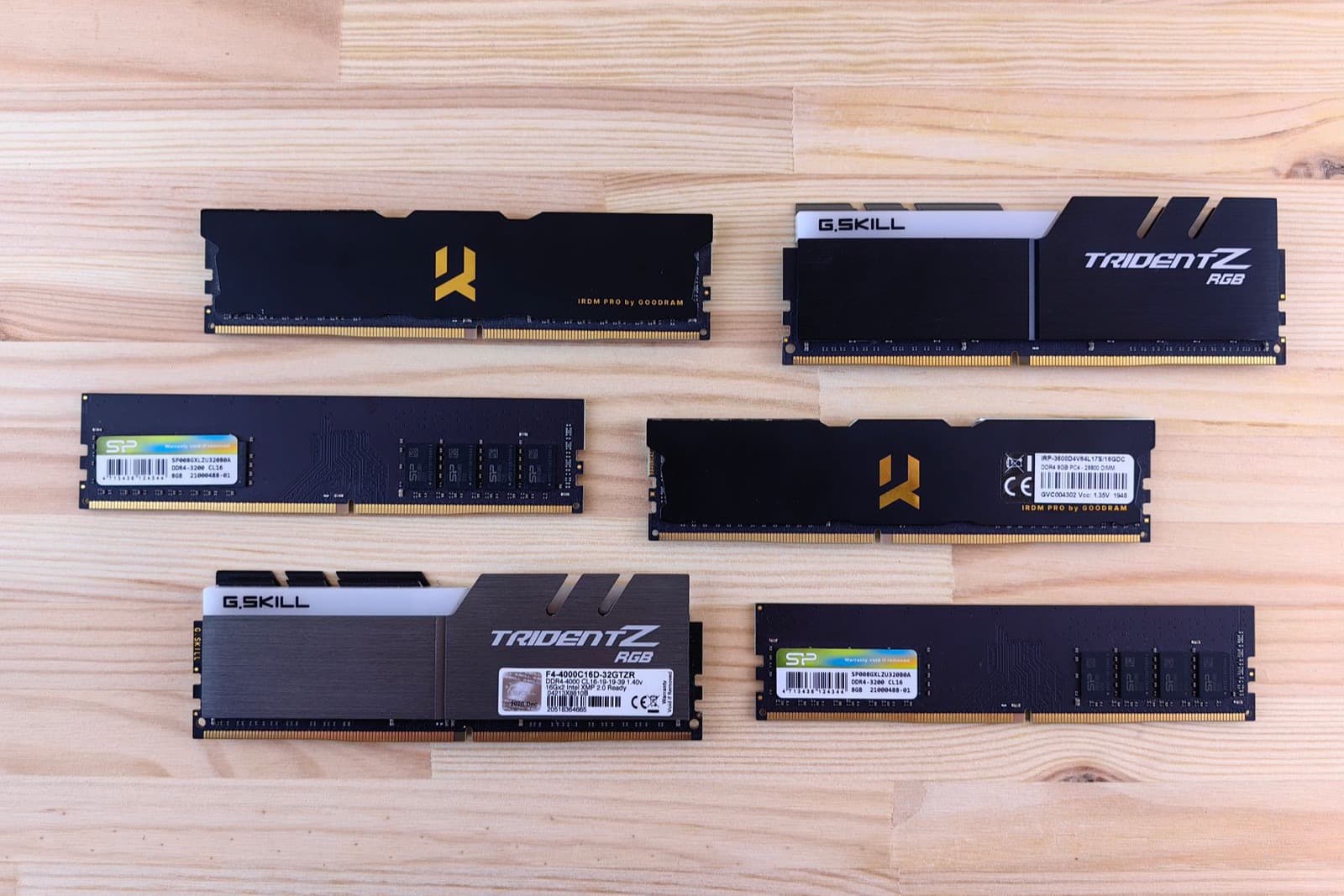
What we take
Here is what we get asked about most, grouped the way people usually have it sitting in a box. If your part is not named below, ask us anyway. This is what comes up most often, not a list of the only things we take, so send it over even if you do not see it here. Telling us costs nothing and takes a minute.
RAM and server memory
Desktop DDR4 and DDR5 from Kingston and Kingston Fury, Corsair Vengeance and Dominator, G.Skill Ripjaws and Trident Z, Crucial, TeamGroup and Patriot. Laptop SODIMM in DDR3, DDR4 and DDR5. ECC server memory is its own category and we want it: DDR4 RDIMM and LRDIMM in 16GB, 32GB and 64GB sticks, along with older DDR3 and DDR3L ECC pulled from Xeon servers. Mixed bags, unlabeled sticks and single odd modules are all fine, and so are bulk trays.
Graphics cards
NVIDIA GeForce RTX 4090, 4080, 4070 Ti and 4070, the RTX 3090, 3090 Ti, 3080, 3070 and 3060, and older GTX 1080 Ti, 1070 and 1060. AMD Radeon RX 7900 XTX, 6800 XT, 6700 XT and 5700 XT. Workstation and compute cards count too, including the NVIDIA RTX A-series, older Quadro cards and Tesla accelerators. Anything carrying 24GB of memory is worth a conversation on its own rather than being lumped in with the rest of a lot.
SSDs and hard drives
Consumer NVMe drives such as the Samsung 990 Pro, 980 Pro and 970 EVO, WD Black SN850X and SN770, Crucial P3 and T500, and SK hynix Platinum P41. SATA drives including the Samsung 870 EVO, Crucial MX500 and WD Blue. Enterprise U.2 and U.3 NVMe as well: Samsung PM9A3, Micron 7450, Kioxia CD6 and the Solidigm and Intel data center P-series, most often in 1.92TB and 3.84TB. Spinning drives have not stopped selling either, so bring WD Red and Red Pro, Seagate IronWolf and Exos, and HGST Ultrastar, usually 4TB and up.
Servers and networking gear
Rack servers such as the Dell PowerEdge R640 and R740 and the HPE ProLiant DL360 and DL380. Switches from Cisco Catalyst, Ubiquiti UniFi, HPE Aruba and Netgear. Firewalls and routers from Fortinet, SonicWall, Cisco and Ubiquiti. The small things that come out of a rack alongside them count as well, including rack UPS units, power distribution units, SFP transceivers, drive caddies and rail kits.
Condition, in plain language
Pulled, untested and dead parts are all still worth bringing. Memory that came out of a machine that would not boot may be perfectly good, and there is often no way to know which stick was the problem without testing them one at a time, which is our job rather than yours. A graphics card that artifacts, a drive that is not recognised, a switch with a dead port, a server missing its caddies and rails: describe it honestly and we will still take a look. Condition changes what we can say about a part, not whether it is worth putting in the box. What we do need from you is the truth about what you know. If a card came out of a mining rig, if a drive was throwing errors, if a server was pulled because it kept crashing, say so. We would much rather hear it up front than find it at the meetup, and being straight about a fault has never once cost a seller the deal here.
Selling from a business, office or server room
If you are clearing a rack, closing an office, or have a pile left over from a refresh, this is the part of the job we like most. Send a list rather than a photo of every item, with the part number and quantity for each line and a note on anything that is known bad. Manufacturer part numbers matter more than model names on memory and drives, because two sticks that look identical can be very different parts, and the part number is what settles it. Photograph the label if you are not sure what you are reading. For a full rack or a room, tell us roughly what is in it and where it is, and we will arrange a pickup instead of asking you to haul it. We can look at everything that came out together, which is usually better for you than splitting a lot up and selling the easy pieces first.
Before you meet us
For anything that stores data, deal with that before you come. Back up whatever you want to keep, then wipe the drive, and if you would rather not hand over the data at all, pull the drive and keep it. A machine sold without its drive is still a machine we can look at. We are not offering a certified data destruction service and will not pretend otherwise, so if your business needs a certificate of destruction for compliance, that is a job for a company set up to issue one. For everything else, a little preparation goes a long way. Keep parts in anti-static bags if you have them, or wrap them so the contacts are not rattling against each other in a box. Bring the part numbers if you can read them off the labels. If a card or a server came with its rails, brackets, caddies or power cables, bring those too, since a complete unit is worth more than the same unit with pieces missing.
How the meetup works
You tell us what you have through the form on this page, or text us a photo of the labels. We set a time and place in the Albany area, or drive out to you if that is easier, which for anything bulky it usually is. Nothing gets shipped and nothing sits in a box waiting on a label. At the meetup we go through what you brought with you standing there, ask about anything unclear, and tell you plainly what we can buy that day. If it is something we can use, you are paid in cash before you leave. If part of the lot is not something we can do anything with, we will say so on the spot instead of stringing you along, and you keep it. Either way you are not waiting on an email or a check in the mail.
Tell us what you have
Questions we get
- Do you buy a single stick of RAM, or do I need a whole lot?
- A single stick is fine. Bring what you have. We buy bulk lots too, and a bigger lot is usually a quicker conversation, but there is no minimum and nobody is going to turn you away for bringing one part.
- My memory came out of a machine that would not turn on. Is it still worth anything?
- Probably, and it is worth finding out. A dead machine does not mean dead memory, and testing sticks one at a time is our job. Just tell us it is untested so we know what we are looking at.
- What is the difference between regular RAM and ECC server memory?
- ECC memory corrects errors on the fly and is what servers use. It usually says ECC, REG, RDIMM or LRDIMM on the label, and it is not interchangeable with the memory in a normal desktop. It is also the kind we are keenest to see, so if your sticks say any of those things on them, mention it.
- Do I have to wipe the drives first?
- Please do, or pull the drives and keep them. Back up anything you want, then wipe. We are not a certified data destruction service, so if your business needs a certificate for compliance, use a company that issues one.
- I have a whole rack to clear. Will you come get it?
- Yes. Tell us roughly what is in it and where it is and we will arrange a pickup rather than have you haul it. A list with part numbers and quantities gets you an answer fastest.
- My part is not on your list. Should I bother asking?
- Yes. The list names what comes up most often, not the only things we take. Send it over and let us make that call rather than guessing.
New to selling with us? Read how it works and what to do before you sell, or contact us with any questions.